

NWSPEC
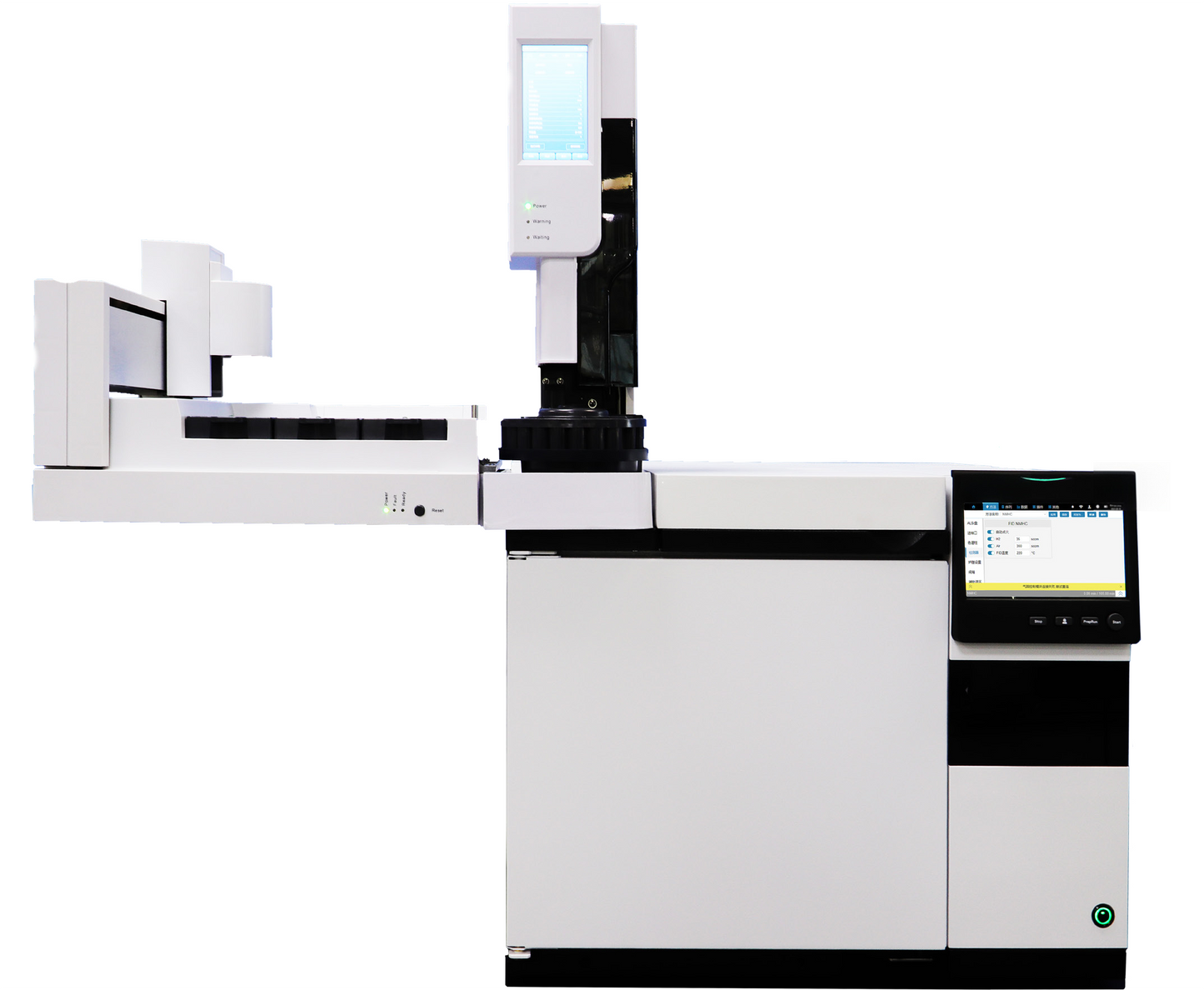
GC System GC60
GC System GC60
Couldn't load pickup availability
GC60 Series
Intelligent Gas Chromatography for the Connected Lab
Why This System?
Traditional GCs lock you into a configuration. When methods change or sample types diversify, you buy another instrument. The GC60 eliminates this with true modularity—swap detectors in under a minute, reconfigure valves for new applications, and operate standalone for field deployment. One platform replaces multiple dedicated instruments.
Maximum Flexibility
5 detectors, 8 valves, 3 independent circuits
Zero Downtime
Swap any detector in <1 minute, one module, one cable
Field Ready
Standalone operation, onboard storage, IoT connectivity
Which Configuration Solves Your Problem?
Select the system architecture based on your analytical challenge. The GC60 scales from routine QC to multidimensional research.
| If Your Challenge Is... | Choose This Configuration | Key Capabilities |
|---|---|---|
| Routine QC with multiple sample types Environmental, petrochemical, pharmaceutical QC |
Standard Multi-Detector | 2-3 detectors (FID, TCD, ECD) with splitter or sequential switching. Run different methods without hardware changes. Valves: 4-valve box for basic column switching. Best for: Labs analyzing diverse sample types with rotating priorities. |
| Complex matrices with co-eluting interferences Trace analysis in crude oil, environmental extracts, food contaminants |
Deans Switch MDGC | Heart-cutting technology diverts specific effluent fractions from Column 1 to Column 2 (different selectivity). Resolves trace compounds hidden under matrix peaks. Valves: 6-valve configuration with Deans switch module. Best for: Regulatory methods requiring definitive identification in complex samples. |
| Maximum resolution for unknown identification Comprehensive characterization, metabolomics, forensics, research |
GC×GC Comprehensive 2D | Full multidimensional separation. Entire sample separated on two columns with orthogonal selectivity. Generates structured 2D chromatograms showing chemical class groupings. Valves: 8-valve box with thermal or flow modulator. Best for: Unknown identification, fingerprinting, and samples with >1000 components. |
Detector Selection: Match Sensitivity to Application
With 5 detector positions, configure for single-method optimization or comprehensive characterization. Mix universal and selective detectors for complete coverage. Swap in under 1 minute without tools.
| Detector | What It Detects | Performance | Best Applications |
|---|---|---|---|
| FID | Organic compounds (C-H bonds). Hydrocarbons, solvents, aromatics, pharmaceutical actives. Does NOT detect: Permanent gases, water, inorganics. | <1.4 pg C/s detection limit >10⁷ linear range 1000 Hz data rate |
Environmental monitoring, petrochemical analysis, pharmaceutical QC, food safety, forensic toxicology |
| TCD | Universal. Any compound with thermal conductivity different from carrier. Organic and inorganic gases, permanent gases (H₂, O₂, N₂, CO, CO₂), water. | 800 pg/mL detection >10⁵ linear range <5 min equilibration |
Industrial gas purity, fuel analysis (H₂, CO, CO₂), process monitoring, permanent gas analysis, water content |
| ECD | Selective. Compounds with electronegative groups (halogens, nitro groups). Pesticides, herbicides, PCBs, anesthetics. | <10 fg/mL detection >5×10⁴ linear range Micro-cell design |
Environmental monitoring (pesticides), pharmaceutical residues, forensic toxicology, electron-capturing compounds |
| FPD | Selective. Sulfur and phosphorus compounds. Organophosphorus pesticides, sulfur compounds in fuels, flavor compounds. | <110 fg P/s <5.7 pg S/s 10⁶ selectivity over C |
Pesticide analysis, petrochemical (sulfur speciation), food/flavor analysis, phosphorous compounds |
| MS (Optional) | Universal + Identification. All volatile compounds with mass spectral identification capability. | Library searchable spectra Structural confirmation Unknown identification |
Unknown identification, confirmation testing, forensic analysis, research, regulatory methods requiring definitive ID |
When Do You Need Multidimensional GC?
Standard 1D-GC
Single column separation. Suitable for:
- Simple mixtures (<50 components)
- Clean matrices without interferences
- Targeted analysis with known retention times
- Routine QC with established methods
Limitation: Co-elution in complex samples causes false positives or missed peaks.
Deans Switch MDGC
Heart-cutting: divert specific fractions to second column. Essential for:
- Trace analysis in complex matrices (crude oil, environmental extracts)
- Resolving target compounds from co-eluting interferences
- Regulatory methods requiring definitive identification
- Chiral separations after initial fractionation
Advantage: Isolates and resolves specific regions of chromatogram with poor separation.
GC×GC Comprehensive 2D Chromatography
How It Works
Entire sample is separated on two columns with orthogonal selectivity (e.g., non-polar × polar). A modulator continuously transfers small fractions from Column 1 to Column 2 throughout the run. Generates a 2D contour plot with structured groupings by chemical class.
When Required
- Samples with >1000 components (petroleum, metabolomics)
- Unknown identification without standards
- Fingerprinting for sample comparison
- Resolving isomers and congeners impossible in 1D
Application Example: Crude oil analysis reveals >30,000 resolved peaks in a single run. 2D plot shows alkanes in one region, aromatics in another, sulfur compounds in third—enabling quantitative analysis by chemical class without individual calibration standards.
Pre-Configured System Architectures
Configuration A: Environmental & Petrochemical QC Lab
Detectors: FID + TCD + ECD (3 positions)
Valves: 6-valve box with Deans switch
Inlets: Split/Splitless + HPLIS (high-pressure liquid)
Capabilities: Routine VOC/SVOC analysis with FID, permanent gases with TCD, halogenated pesticides with ECD. Deans switch enables heart-cutting for trace analysis in complex soil/water extracts. HPLIS allows direct crude oil injection C1-C40+.
Configuration B: Industrial Process & Gas Analysis
Detectors: 2× TCD + FID
Valves: 8-valve box with gas sampling valves
Configuration: Parallel TCD channels for continuous process monitoring
Capabilities: 24/7 process monitoring with redundant TCD channels. One channel for fast screening, second for high-resolution confirmation. FID for trace organic contamination in gas streams. 8 valves enable automatic stream switching and sample preparation.
Configuration C: Research & Advanced Characterization
Detectors: FID + MS (or 2× FID for GC×GC)
Valves: 8-valve box with Deans switch and modulator
Mode: GC×GC comprehensive 2D or heart-cutting MDGC
Capabilities: Maximum separation power for unknown identification. GC×GC provides structured 2D chromatograms showing chemical class groupings. MS detection enables library identification of resolved peaks. Deans switch allows isolation of specific regions for enhanced sensitivity.
Key Technologies & Business Impact
HPLIS: High Pressure Liquid Injector
The Technology
Direct-mount injector for continuous high-pressure liquid sampling. C1-C40+ range with rapid vaporization and non-discriminatory introduction. Eliminates manual syringe sampling for volatile liquids.
Why It Matters
Petrochemical applications: Direct crude oil analysis without sample preparation. Process monitoring: Continuous LPG/NGL sampling. Reproducibility: Eliminates operator variability from manual injection.
ROI Impact: Eliminates 15-30 minutes sample prep per crude oil sample. In a lab processing 50 samples/day, this equals 12-25 hours of technician time daily.
UniLite IoT Platform
The Technology
Web-based control from any browser—no proprietary software. Real-time instrument status, method editing, sequence monitoring. Encrypted VPN for remote diagnostics. Automatic firmware updates.
Why It Matters
Operational efficiency: Start runs from office, monitor from home, receive fault alerts via SMS. Service reduction: 70% of issues resolved remotely without site visit. Compliance: Built-in audit trails and electronic signatures for 21 CFR Part 11.
Downtime Reduction: Remote diagnostics enable service technicians to troubleshoot before arriving. Average repair time reduced from 2 days to 4 hours.
Modular Detector Architecture
The Technology
Any detector swaps in under 1 minute. One module, one cable, no tools. Highly integrated design with standalone data processing. Visual hardware configuration in software.
Why It Matters
Method flexibility: Switch from FID for routine QC to ECD for pesticide screening to MS for unknown identification—same day, same instrument. Training: Novice users can swap detectors without service calls.
Capital Efficiency: One GC60 with 5 detector modules replaces 3-4 dedicated single-detector instruments. ROI typically 18 months for multi-method labs.
Request Configuration Analysis
Complex analytical challenges require strategic system architecture. Our applications engineers will analyze your sample types, matrix complexity, and throughput requirements to design an optimal configuration.
Demo methods available for your specific applications.
Accessory Product
Available accessory products for GC 6000


