

NWSPEC
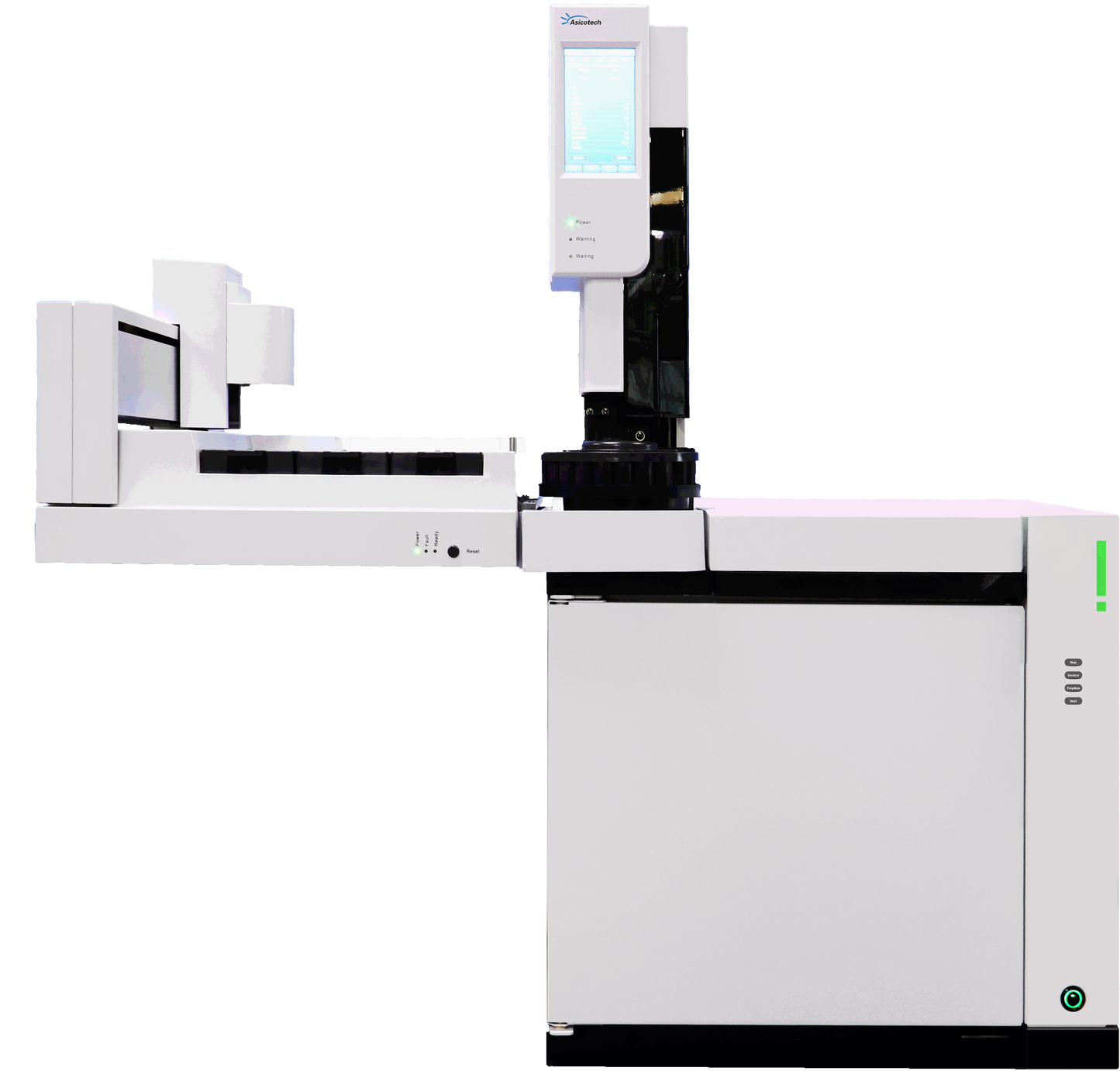
GC System GC20
GC System GC20
Couldn't load pickup availability
Smart GC System
Configuration Guide: Build the Right System for Your Application
Quick Configuration Guide
Match your analytical requirements to the optimal configuration. The Smart GC supports two inlets and two detectors—choose identical detectors for parallel analysis or different detectors for comprehensive coverage.
| If You Analyze... | Recommended Configuration | Why This Setup |
|---|---|---|
| Organic compounds, hydrocarbons, solvents, pharmaceuticals Environmental, petrochemical, forensic, food safety |
Dual FID | Maximum sensitivity for organics (detection limit <3 pg C/s). Run two columns simultaneously for parallel screening and confirmation, or analyze different sample types without reconfiguration. Best for: Trace-level organics, routine QC, high-throughput screening. |
| Permanent gases, inorganics, light hydrocarbons, water Industrial gas purity, fuel analysis, process monitoring |
Dual TCD | Universal detection for any compound with thermal conductivity different from carrier gas. Detects H₂, O₂, N₂, CO, CO₂, H₂O that FID cannot see. Non-destructive allows post-detector collection. Best for: Gas purity testing, fuel characterization, process control. |
| Both organic and inorganic compounds Comprehensive unknown screening, complex mixtures, research labs |
FID + TCD | Complete coverage in one run. FID detects trace organics with high sensitivity; TCD captures inorganics and water. TCD can be operated in-series before FID for complementary detection of the same sample. Best for: Full characterization, unknown identification, mixed matrices. |
Detector Selection: FID vs TCD
Flame Ionization Detector (FID)
What It Detects
Organic compounds containing carbon-hydrogen bonds. Hydrocarbons, solvents, alcohols, aromatics, pharmaceutical actives. Does NOT detect: H₂, O₂, N₂, CO, CO₂, H₂O, inorganic gases.
Performance
- Detection limit: <3 pg C/s (hexadecane)
- Linear range: >10⁷
- Data rate: Up to 100 Hz
- Repeatability: <0.1% (qualitative), <2.0% (quantitative)
Best Applications
Environmental monitoring, petrochemical analysis, food safety testing, pharmaceutical QC, forensic toxicology, trace-level organics in complex matrices.
Thermal Conductivity Detector (TCD)
What It Detects
Universal detector—responds to any compound with thermal conductivity different from carrier gas. Organic and inorganic gases, permanent gases, water. Key advantage: Detects compounds FID cannot see.
Performance
- Detection limit: 800 pg propane/mL (He carrier)
- Sensitivity: 80,000 mV·mL/mg
- Linear range: >10⁵
- Equilibration: <5 minutes from startup
Best Applications
Industrial gas purity, fuel analysis (H₂, CO, CO₂), process monitoring, permanent gas analysis, water content determination, corrosive gas analysis (with protection), samples requiring non-destructive detection.
Inlet Selection Guide
| Sample Type | Recommended Inlet | Configuration |
|---|---|---|
| Liquid samples, trace analysis, dirty matrices | Split/Splitless Capillary | Split mode for concentrated samples (up to 7500:1 ratio). Splitless for trace analysis. Pulsed options for wide boiling ranges. Compatible with 50μm to 530μm columns. |
| Gas samples, permanent gases, packed column applications | Packed Column Inlet | 1/4" or 1/8" packed columns. 0.530mm capillary compatible. Higher flow rates for gas analysis. Robust for routine industrial applications. |
| Volatile organics, headspace, purge-and-trap | Split/Splitless with Narrow Liner | Use narrow ID liner (1.0mm) for gaseous samples to minimize band broadening. Ensures tight sample band for volatile compounds. |
Autosampler Configuration
19-Position
Entry-level configuration. Suitable for low-throughput labs, method development, and educational environments.
Best for: R&D, small batch QC, teaching labs
22-24 Position
Standard laboratory use. Balanced capacity for routine analysis without excessive solvent consumption from needle washing.
Best for: Routine QC, medium-throughput labs
100-161 Position
High-throughput operation. Extended unattended operation with hot-swappable trays and empty vial detection.
Best for: 24/7 operation, high-throughput screening, industrial labs
Recommended System Configurations
Configuration A: Environmental & Petrochemical Lab
Inlets: 2× Split/Splitless Capillary
Detectors: 2× FID
Autosampler: 150-position with dual tower
Rationale: Parallel FID configuration allows simultaneous screening and confirmation. Run different methods on each channel. High-capacity autosampler supports overnight runs for high-throughput environmental screening or petrochemical analysis.
Configuration B: Industrial Gas Analysis
Inlets: 2× Packed Column
Detectors: 2× TCD
Autosampler: 24-position with gas sampling valve interface
Rationale: Dual TCD provides universal detection for H₂, O₂, N₂, CO, CO₂, CH₄ and other permanent gases. Packed columns handle higher flow rates required for gas analysis. One channel for fast screening, second for high-resolution confirmation.
Configuration C: Research & Unknown Identification
Inlets: 1× Split/Splitless + 1× Packed Column
Detectors: FID + TCD (in-series capable)
Autosampler: 100-position with IR scanning option
Rationale: Maximum flexibility. FID captures trace organics; TCD captures inorganics and water. In-series operation provides complementary detection of the same sample. Mixed inlet types support both capillary and packed column methods.
Key Specifications & What They Mean for You
Electronic Flow Control (EFC): Precision That Eliminates Variability
The Specification
- 0.01 psi pressure precision
- Up to 4 EFC modules, 8 gas channels
- Constant pressure, flow, or linear velocity modes
- 11-step programmable gradients
Why It Matters
Manual pressure control causes retention time drift and failed peak identification. EFC maintains exact flow rates regardless of temperature changes or barometric pressure fluctuations. Result: Day-to-day retention time reproducibility <0.1%, eliminating false positives in regulatory screening.
Application Example: In temperature-programmed analysis, gas viscosity increases as the oven heats. Without EFC, flow drops, peaks broaden, and analysis time extends. EFC automatically compensates—maintaining constant linear velocity for sharp peaks and predictable run times.
Oven Performance: Speed and Range for Any Sample
The Specification
- Ambient +4°C to 425°C range
- 0.1°C temperature precision
- 100°C/min maximum heating rate
- 6.5 min cooldown (450°C to 50°C)
Why It Matters
425°C maximum enables analysis of high-boiling compounds—hydrocarbons up to C100, waxes, triglycerides, and polymer additives that 350°C ovens cannot handle. 100°C/min heating with 100 programmable ramps allows complex multi-step temperature programs for difficult separations.
Throughput Impact: Fast cooldown (6.5 min) means more samples per day. A 30-minute analysis with 15-minute cooldown on conventional systems becomes a 30-minute analysis with 6.5-minute cooldown—enabling 20% more samples per 24-hour period.
Column Compatibility: Flexibility for Any Method
The Specification
- Capillary: 50μm to 530μm ID
- Packed: 1/4" and 1/8" columns
- 5 independent heated zones
- Up to 2 gas valve positions
Why It Matters
530μm wide-bore columns handle higher sample loads for preparative work or trace analysis. Narrow 50μm columns deliver maximum theoretical plates for complex separations. Packed columns accommodate legacy methods and gas analysis. 5 heated zones allow independent temperature control for inlet, detector, transfer lines, and valves.
Method Transfer: Compatible with existing columns from any manufacturer. No proprietary column requirements—protect your existing method investments.
Multi-Platform Control: Access From Anywhere
The Specification
- 7" color touchscreen (local)
- Mobile and tablet access
- PC workstation software
- Priority-managed access control
Why It Matters
Start runs from your office PC, monitor progress on your phone, or make adjustments at the touchscreen. Priority management prevents conflicts—PC control for method development, local touchscreen for routine operation, mobile view-only for status checks.
Operational Efficiency: Remote monitoring reduces unnecessary lab visits. Check instrument status, review sequences, and receive alerts from any location.
Request Configuration Consultation
Unsure which configuration fits your workflow? Our applications team will evaluate your sample types, throughput requirements, and analytical goals.
Custom configurations available for specific industry requirements.
Accessory Product
Available accessory products for GC 6000


