Skip to product information
1 of 1

NWSPEC

Portable GC-MS for Hazmat Response, Environmental Monitoring & Forensics

Portable GC-MS for Hazmat Response, Environmental Monitoring & Forensics

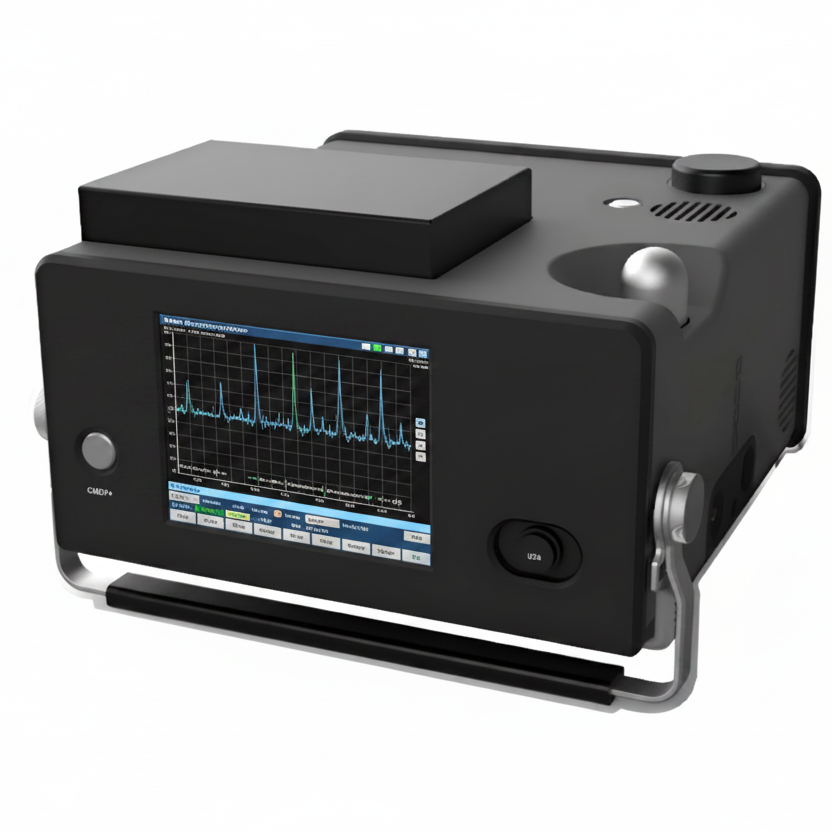
Mobile GC-MS

Laboratory-Grade Analysis in the Field

Under 20 kg | Battery Powered | IP43 Rated

Why Mobile GC-MS?

Traditional sampling requires collection, transport, preservation, and lab analysis—taking days with risk of sample degradation and concentration changes. Mobile GC-MS brings the laboratory to the sample, delivering definitive identification and quantification in minutes for time-critical decisions.

Real-Time Results

Analysis in 10 minutes vs. 45-day lab turnaround

Sample Integrity

Eliminates degradation from transport and storage

Definitive ID

NIST library matching vs. presumptive sensors

When Do You Need Mobile GC-MS vs. Laboratory Analysis?

Select portable GC-MS when time-critical decisions, sample preservation, or scene safety require immediate on-site analysis. Use laboratory analysis for complex matrices requiring maximum resolution.

If Your Situation Is... Choose Mobile GC-MS Why Portable Wins
Emergency response, chemical spill, unknown substance
Hazmat, CWA, explosives, clandestine labs
Immediate confirmatory identification Misidentification leads to wrong response—evacuation vs. controlled disposal. Lab analysis takes 45 days; scene decisions needed in minutes. NIST library provides definitive ID vs. presumptive sensors [^78^][^83^].
Environmental monitoring, VOCs in air/water
Industrial emissions, groundwater, site assessment
On-site real-time quantification VOC concentrations change during transport and storage. Lab results don't reflect actual site conditions. On-site analysis guides immediate remediation and disposal decisions [^83^][^86^].
Forensic investigation, fire debris, explosives
Crime scene, arson investigation, post-blast
Field evidence analysis Evidence degrades during packaging and transport. Field analysis preserves volatile ignitable liquid residues and accelerant identification. Rapid results advance investigations immediately [^85^].
Complex matrices requiring maximum resolution
Petroleum characterization, metabolomics, research
Laboratory GC-MS or GC×GC Portable systems trade resolution for size and power. Complex samples with >1000 components or requiring sub-ppm detection limits need laboratory high-resolution MS or comprehensive 2D-GC.

Why GC-MS vs. Other Field Technologies?

Portable Sensors (PID, FID, IMS)

Presumptive detection only. Respond to classes of compounds, not specific molecules. Cannot distinguish toluene from xylene or benzene.

Use for: Scene size-up, perimeter monitoring, rapid screening.

Mobile GC-MS (This System)

Confirmatory identification. Chromatographic separation + mass spectral detection = definitive compound identification via NIST library matching.

Use for: Unknown identification, legal defensibility, remediation decisions.

Combined Strategy: Start with sensors for rapid scene size-up, confirm with Mobile GC-MS for definitive identification and source tracking. GC-MS provides the resolution and library matching required for legal defensibility and remediation liability.

Sample Introduction: Match Method to Matrix

The Mobile GC-MS accepts multiple sampling modules. Select the configuration based on your target compounds and sample phase.

Sample Phase Introduction Method Best For
Gas/Vapor (Air) Built-in adsorption tube + quantitative loop
Direct MS injection mode for rapid screening
Ambient air monitoring, industrial emissions, hazmat perimeter, breath analysis. Direct injection bypasses GC for 10-second response.
Liquid Gas-tight syringe injection
SPME (Solid Phase Microextraction)
Water analysis (groundwater, wastewater), beverages, bodily fluids. SPME extracts organics without solvent.
Solid/Soil Headspace sampling
Thermal desorption
SPME
Soil contamination, fire debris, packaging materials. Headspace isolates volatiles from complex matrix.
Unknown/Complex PSI-Probe (Prepless Sample Introduction)
CMV (Capillary Microextraction)
Direct solids/liquids analysis without preparation. Fire debris, unknown powders, viscous liquids.

Recommended System Configurations

Configuration A: Emergency Response & Hazmat

Base Unit: Mobile GC-MS with standard inlet

Sampling: Built-in adsorption tube + direct MS injection

Transport: Shoulder carry + vehicle mount

Capabilities: Rapid unknown identification at hazmat scenes. Direct MS injection provides 10-second screening for threat assessment. GC-MS mode confirms identification with NIST library match. IP43 rating for outdoor conditions. Battery operation for areas without power.

Configuration B: Environmental Monitoring

Base Unit: Mobile GC-MS

Accessories: Mobile Headspace Sampler (≤6 kg) + Mobile Thermal Desorber (≤6 kg)

Power: Integrated battery system, AC/DC adapter

Capabilities: VOCs in water (headspace), SVOCs in soil (thermal desorption), ambient air monitoring. Headspace sampler: 4+ independent heating positions, 30-80°C equilibrium. Thermal desorber: <1 ppb detection limit for toluene, active and passive sampling modes. Full mobile lab in three cases.

Configuration C: Forensics & Fire Investigation

Base Unit: Mobile GC-MS with PSI-Probe

Sampling: CMV device + paper cup headspace

Accessories: Mobile SPME Unit (≤8 kg, battery powered)

Capabilities: Ignitable liquid residue identification at fire scenes. PSI-Probe enables direct debris analysis without solvent extraction. CMV dynamic extraction with 5-minute protocol at ambient temperature. SPME for sensitive detection of accelerants. Immediate results advance investigations before evidence degrades.

Key Specifications & Field Impact

Weight & Portability: Under 20 kg Complete

The Specification

<20 kg total system weight including battery and carrier gas cylinder. Shoulder carry, handheld, or vehicle mount configurations.

Why It Matters

First responders reach core hazard zones without equipment burden. Vehicle mount with shock absorption enables mobile lab deployment. Drones can carry unit for remote sampling in dangerous areas.

Operational Advantage: Traditional mobile labs require large vehicles and dedicated power. This system deploys in a standard vehicle trunk or backpack, enabling rapid response without specialized transport.

Vacuum System: Oil-Free Turbomolecular Pump

The Specification

≥60 L/s turbomolecular pump, oil-free design. Direct 1.0 mL/min carrier gas flow to MS. Mass range 2–550 u.

Why It Matters

Oil-free pump eliminates maintenance and contamination risk in field conditions. High pumping speed maintains vacuum with direct column flow, enabling standard capillary columns (not limited to micro-packed). 2–550 u range covers VOCs through SVOCs including PAHs and pesticides.

Field Reliability: Oil-sealed pumps fail in mobile applications due to vibration and orientation changes. Turbomolecular pumps operate in any position, enabling true portable operation.

Environmental Hardening: IP43 Rating

The Specification

IP43 ingress protection. Operating temperature 0–45°C. Dust and water spray resistant.

Why It Matters

Operates in rain, dust, and temperature extremes where laboratory instruments fail. Essential for outdoor emergency response, industrial sites, and military applications. No climate-controlled vehicle required.

Deployment Flexibility: Laboratory GC-MS requires 15–25°C, <60% RH, vibration isolation, and dedicated power. This system operates in deserts, tropics, and industrial environments without environmental control.

Request Field Deployment Consultation

Every emergency response and environmental monitoring scenario has unique requirements. Our applications team will configure the optimal sampling accessories and method parameters for your specific field challenges.
On-site demonstrations available with your sample types.

Delivery: 8-12 weeks ARO | Field training included | 24/7 emergency support | NIST library included
Request for Quote
Shipping calculated at checkout.

View full details

Frequently Asked Questions

How can I contact you?

Feel free to call us T+86 189-6516-4839
or email  sales@nwspec.com to:

• Place an order
• Ask for a quote
• Or if you have any other questions

You will always get a live person here at NWSPEC; never an automated system! 

We are open from 6:00AM - 7:00PM Eastern Time, Monday - Friday. 

Where can I find application notes?

If you have any questions regarding the application notes, or can't find the one you are looking for, please contact Sales at sales@nwspec.com


Do you have instructional manuals for your instruments to download?

Yes, we have instructional manuals for our instruments. They can be found on https://nwspec.com/pages/resource .

If you don't see the one you are looking for, please contact: sales@nwspec.com


Contact form

Track Order

Please enter your tracking number below: